Date: Shawwal 26, 1447 AH (April 14, 2026)
Written by Iram Sammar
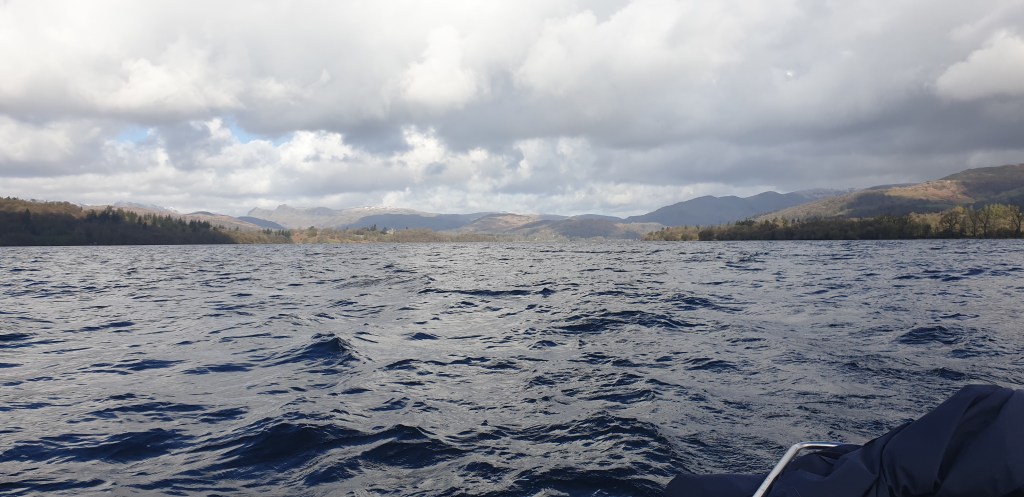
Surrounded by the powerful fells with the gentle movement of water, Lake Windermere shimmered beautifully, which filled a yearning heart with peace.
There’s something special about presenting at a conference, feeling the energy of fellow geographers and the wider community and stepping straight into a landscape that feels like a living textbook. The Lake District was a real treat after attending the Geographical Association Conference 2026, where the theme ‘Geography makes a difference’ with Catherine Owen took place at Sheffield College – City Campus. This year, there were important discussions facilitated, and it was great to be a part of these discussions. Although I spent less time mingling with fellow geographers, which I can pick up on next year, I explored the country a little. For students deciding on options for GCSEs or A levels, geography is one of those underrated subjects that allows you to explore the intricate balance, or al-Mizān (see commentary), of human life and our natural environment. In the Dīn (way of life) of Islam, it is believed that between the Earth’s physical systems and human activity, we humans are stewards with a responsibility to reflect on the ethical responsibility we carry in how we treat our environment and each other. I spoke briefly about this concept in one of my presentations at the GA conference (read blog here):
“We are facing humanitarian and environmental crises that are evidently asking humanity to rethink how we live in this world we share.”
(Sammar, 2024)
Muslim geographer exploring between the fells and faith
As a Muslim female geographer, my journey through geography has been challenging, but I would say more of a rewarding academic choice. I see this choice as a way of better understanding the world as a trust, or an amanah, that we are all responsible for. What we love is what we should take care of. Studying issues like climate change, development, and global inequality has deepened my awareness not only as a student but as someone guided by values of stewardship, justice, and compassion. It has shown me that knowledge is not just about observation, but about action, especially about asking how we can create more sustainable cities, reduce harm, and support vulnerable communities near and far. Geography has given me a voice in conversations that matter, empowering me to challenge assumptions and contribute meaningfully to this fast-changing world. I say this while staying grounded in my identity and purpose, and push to decolonise and encourage anti-racism.
I arrived at the Lake District with a set of quiet assumptions about what I might encounter: ‘whiteness,’ not belonging, alienation, which I found to be shaped more by distance than reality. This is an important moment for the UK and its connections to the wider world. What struck me almost immediately on my travels, however, was not difference, but warmth, the kind that reshapes your expectations without noise. We stopped off at various locations to perform ablution for prayers, whilst praying in the open countryside. It felt safe, a sense of openness and friendliness that genuinely surprised me, echoing the same welcoming atmosphere I had previously experienced in the Peak District (see blog). In fact, I felt many of the hikers and locals made a point to say ‘hello,’ to make conversation, and ask to ask, ‘are the children enjoying themselves?’ Had I not visited, they would not have met me, and I would not have met them.
Fieldwork opportunity point to note: Although these landscapes are often imagined as remote or insular, with your students, they can reveal something far more human: all the small conversations, shared spaces, and an ease of interaction that can cut across background and identity. Geography, in that moment, should not just be about physical landscapes, but spiritual and social too. It can evoke the notion that places are not defined by assumptions, but by lived experience and the people who shape them. If you are a student, ask your fieldwork teacher to allow you a few minutes to absorb the atmosphere and record interesting conversations with fellow students or people you encounter. Make the experience take a really rich direction, where experience, perception, and meaning matter just as much as data. When you use sensory geography, take note of what you see, hear, smell, feel – pair this with spiritual or emotional connections to place. Here are some thoughtful, deeper fieldwork questions you could use:
Sensory and Spiritual Geography Fieldwork Questions
- How does this place feel through your senses (sound, smell, texture, temperature)?
- Which sensory experience is strongest here, and why might that be?
- How do sensory experiences change between locations (e.g. rural vs urban)?
- What emotions are evoked by the landscape, and how are they linked to sensory input?
- How does weather or time of day alter your sensory perception of this place?
- Do different people experience this place differently through their senses?
- Does this place evoke a sense of peace, awe, or reflection? Why?
- Are there features of the landscape that feel meaningful or sacred (personally or culturally)?
- How do people use this space for escape, mindfulness, or connection?
- In what ways does this environment encourage or discourage reflection or stillness?
- Is there a sense of belonging or detachment here? What creates that feeling?
- Can you think of more questions?
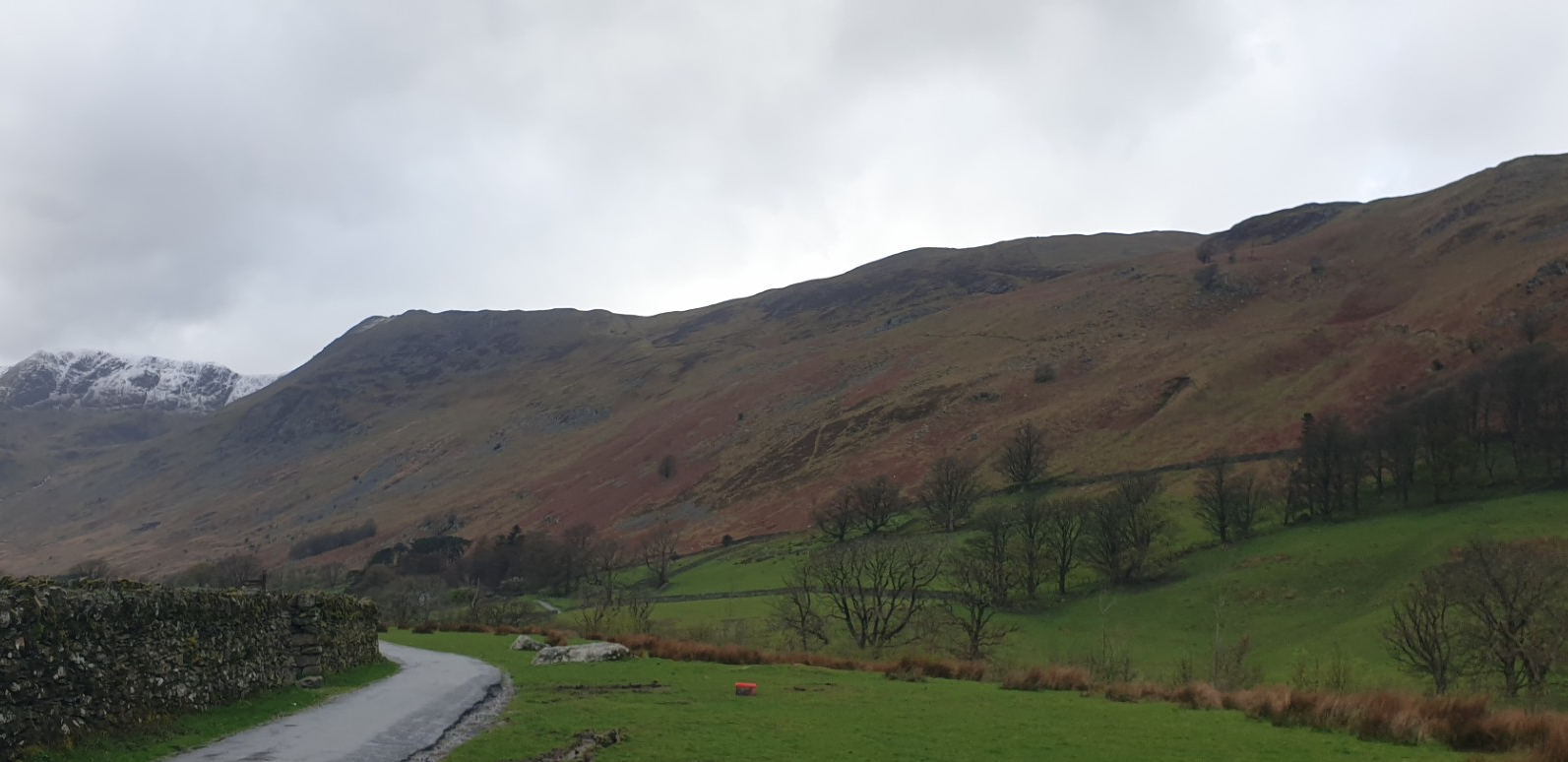
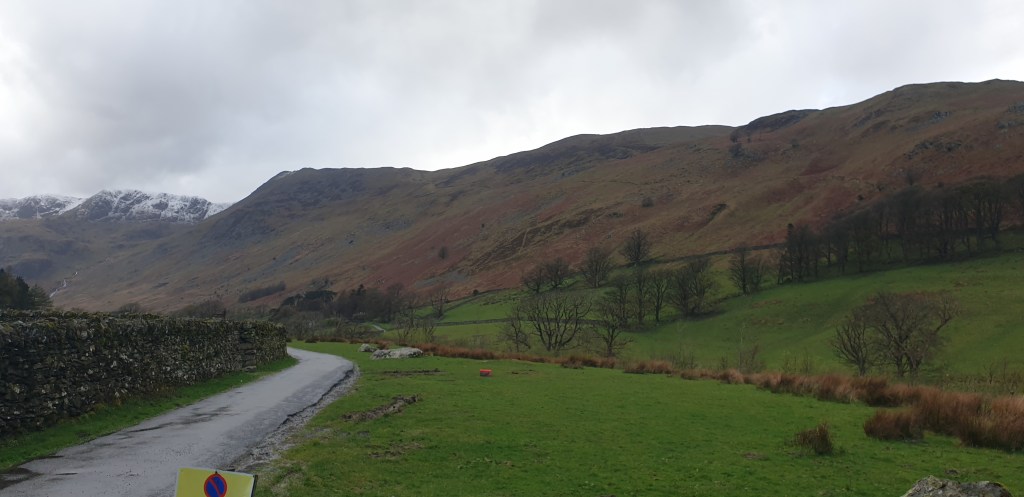
As we drove through the Lake District, we experienced a powerful, almost continuous transect through a classic glaciated landscape, and it’s an ideal opportunity for A-level students to observe geomorphology in motion. My students in this moment were my own children, much younger, but just as curious. Moving through the valleys makes you appreciate the characteristic U-shaped troughs, with their steep sides and wide, flat valley floors, clear evidence of past glacial erosion through processes such as abrasion and plucking. Teaching about glaciation was tough in the first few years in the classroom, but I have always found it very rewarding, as you get to use your art skills. My Head of Department at a school in London, taught me to not be afraid of the more difficult topics such as glaciation. Here, I developed a desire to visit the Lake District, but surprisingly hadn’t been there.
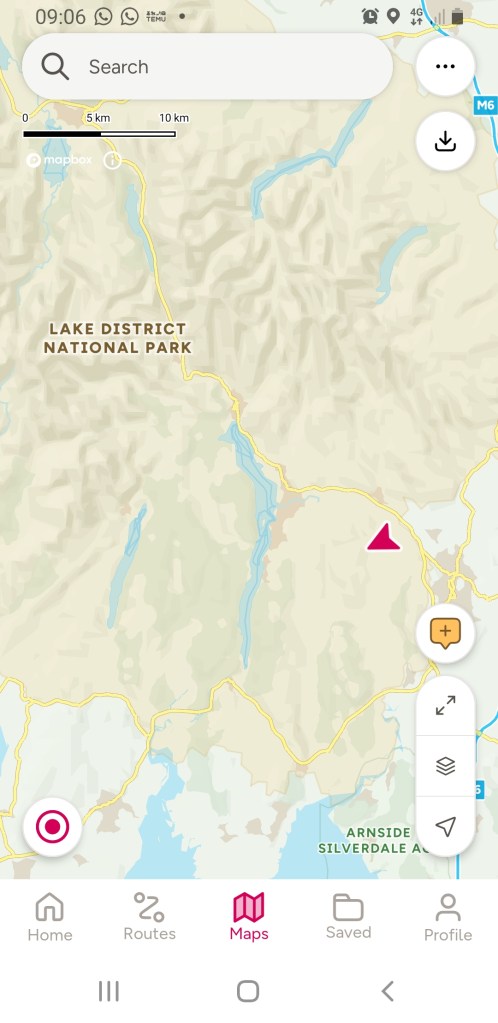
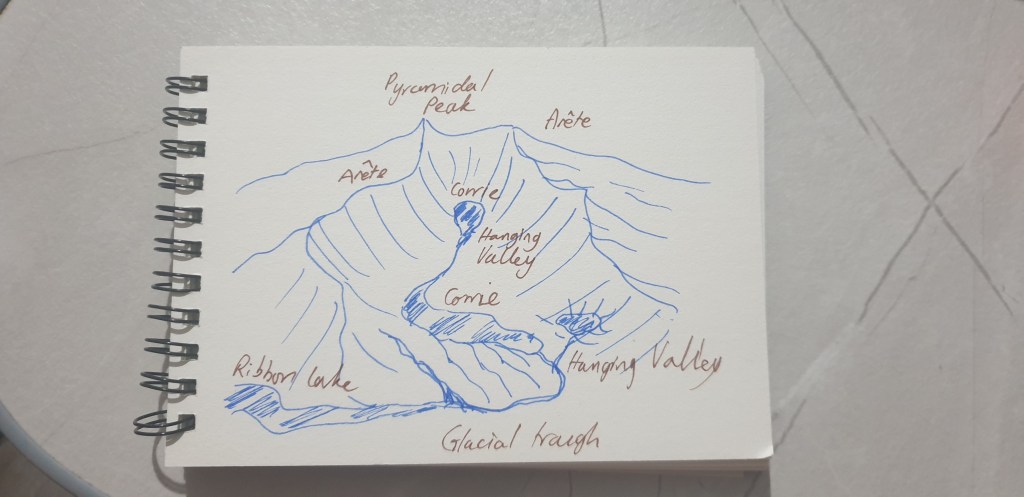
Sketching features like hanging valleys becomes visible where smaller tributary glaciers once joined a main glacier, often now marked by waterfalls. The breath-taking presence of ribbon lakes, over-deepened by glacial action and later filled with meltwater, further emphasises the scale and power of ice during the last glacial period. What might be valuable from a fieldwork perspective is how these features are not isolated, as they form an interconnected landscape system, allowing students to interpret past climatic conditions and reconstruct glacial dynamics simply by reading the land as they travel through it. With the latest mapping apps, we can accelerate learning through screenshot capture for use on graphs and fieldwork assignments. Using the OS Maps App during the trip was incredibly useful, especially for visualising the landscape through contour lines. Instead of just seeing hills in front of me, I could interpret their steepness, elevation, and shape directly from the map – this helped me link what I had taught in class to the real world. The contour patterns made it easier to understand why certain routes felt more challenging and how glacial processes had shaped the valleys. It turned navigation into a form of active fieldwork, helping me read the landscape more confidently while deepening my geographical understanding.
As I travelled further north into Cumbria, those abstract concepts I once taught in geography lessons suddenly felt deeply, personally real. Often described as the ‘quintessential’ English landscape, the rolling fells, dry stone walls, mirror-like lakes, and sheep scattered like cotton wool across green hills, it’s that image printed on postcards, embedded in literature, and taught in classrooms coming alive. It is reliving geography you thought you knew, but arriving in reality has no words. Did I forget to mention the adorable daffodils? So many different varieties.
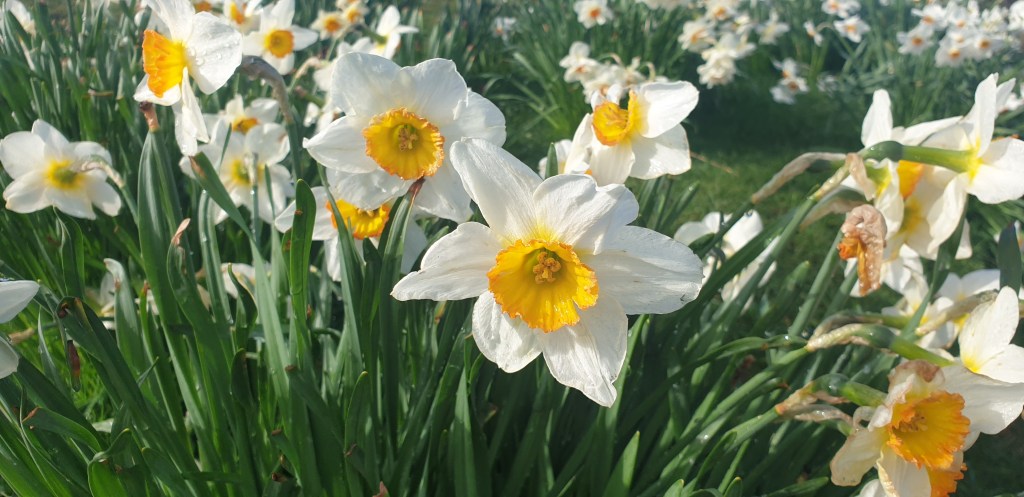
Being there hits different
The sudden change in moods, where the air feels sharper, cleaner, as if each breath carried centuries of stories. The glacial valleys, U-shaped and scenes from fantasy movies stood as reminders of powerful natural processes, while the lakes themselves reflected not just the sky, but something in a whisper and more spiritual. This is physical geography you can see, touch, and feel. It can not just be captured in a diagram in a textbook, as it is a lived experience.
Yes, alongside that awe, I felt something more meaningful and complex.
As a Muslim in what is often perceived as a predominantly ‘white,’ rural space, I became acutely aware of my presence in the landscape. Geography teaches us that places are not just physical—they are social, cultural, and emotional. Standing by the edge of a lake, surrounded by such overwhelming beauty, I also found myself thinking: Who is this space for? Who feels they belong here? Although an abrupt thought would ask Can I live here?
So, there is a stark tension in being both a participant and an observer.
On one hand, I was completely absorbed in the landscape, with the way the light shimmerered across the waters and pitched the hills, the patterns of erosion on footpaths, the human interaction of tourism shaping the environment. On the other hand, I did noticed the absence of visible diversity, the subtle feeling of being an ‘alien’ in a place that is so often presented as universally belonging to everyone. Although efforts were made for conversations and interaction, I couldn’t help but notice the facination felt by people, of seeing a visibly Muslim family eploring and asking for directions.
And yet, perhaps that is exactly why decolonising fieldwork matters.
Geography is more than studying rivers, rocks, or rural economies, as it is also about understanding how people experience space differently. My visit became more than a scenic trip, it was full of emotional fieldwork possibilities. I went beyond mere observation of the landscape, I had the opportunity to reflect on my relationship with it.
For GCSE and A Level students, this is where geography can become more meaningful and powerful. Fieldwork has data collection, but it is not only about measuring river velocity or counting footpath erosion. It can be about asking deeper questions:
- How do different people experience the same place?
- What makes a landscape feel inclusive, or exclusive?
- How do culture, identity, and history shape our connection to the environment?
The Lake District also offers incredible opportunities for interdisciplinary exploration, especially with art. The same landscapes that inspired poets and painters can inspire your own creative responses. Sketch the contours of a valley. Photograph the contrast between human and physical features. Write about how a place makes you feel, not just what it looks like.
An example is William Wordsworth, making it one of the most potent literary landscapes in Britain. Wordsworth was blessed to have lived much of his life in the Lake District, most famously at Dove Cottage, and the surrounding landscapes directly inspired his poetry. He was a key figure of the Romantic movement, where he was fascinated by physical geography, not just as scenery, but as something spiritual, emotional, and transformative. Those mountains, lakes, and valleys of the region meant more to him, as they inspired him to capture the relationship between humans and the natural world through words. Coming back to daffodils, his famous poem ‘I Wandered Lonely as a Cloud‘ was inspired by these unique flowers, especially the ones he saw near Ullswater. Through his writing, Wordsworth helped redefine how people valued landscapes, beyond the material, for their beauty and emotional significance.
As geography teachers, we can link this to cultural ecosystem services, as Wordsworth contributed to the idea, with the notion that environments provide inspiration, identity, and well-being. His work has also played a significant role in shaping the Lake District’s identity as a place worth protecting, which eventually contributed to its status as a UNESCO World Heritage Site. So, the Lake District makes the interdisciplinary connection that isn’t just a physical landscape, but also a literary and spiritual one, shaped and popularised by Wordsworth’s vision of nature.
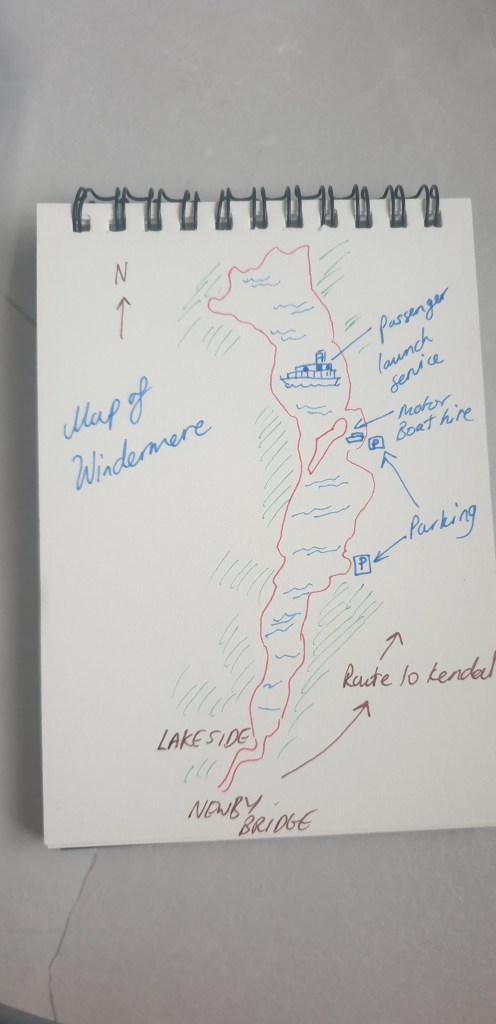
Art allows you to capture what data cannot. It helps when making small personal maps for travel. As a geographer, I always find it useful to make myself reminder maps to map where I want to go the next day. Below is an example – not the most accurate but very useful.
Below is an example of me trying to explain to an 11 year old all the different features of glacial landscapes. I am sketching away, and my youngest says, ‘You need to get back into the classroom, we can’t be your students forever!’
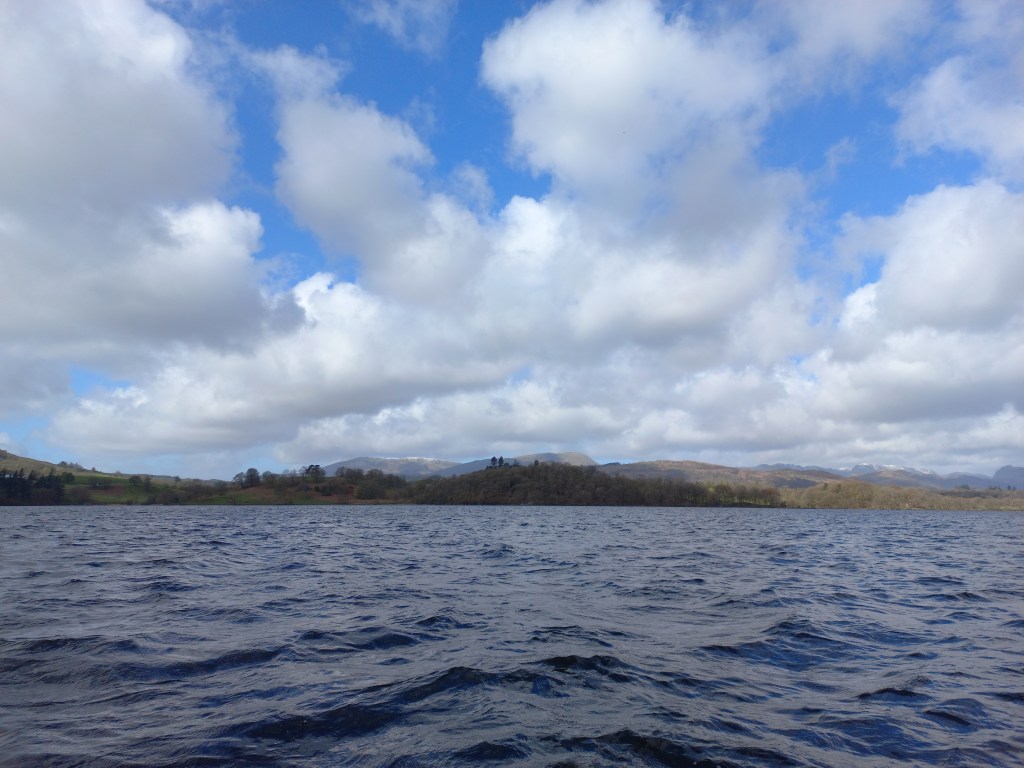
I had this small sketchbook handy for making notes and field sketches. For me, on numerous occasions, I stood looking across the water, acknowledging that geography and art are not separate subjects, they are different ways of understanding the same world. My trip to the Lake District, coming straight after the Geographical Association Conference, felt like a bridge between theory and reality. The discussions about identity, belonging, and space didn’t stay in the college halls, they all came with me into the hills, into the silence, into the reflections on the water. And maybe this can be the most important lesson for students: geography is something you live, everyday.
So, when you go on your next fieldwork trip, go beyond data collection. Notice how the place makes you feel. Question your assumptions. Think about who is present, and who isn’t. And don’t be afraid to respond critically and creatively – because sometimes, the most meaningful discoveries aren’t the ones you measure, they are the ones you feel.
Family fun
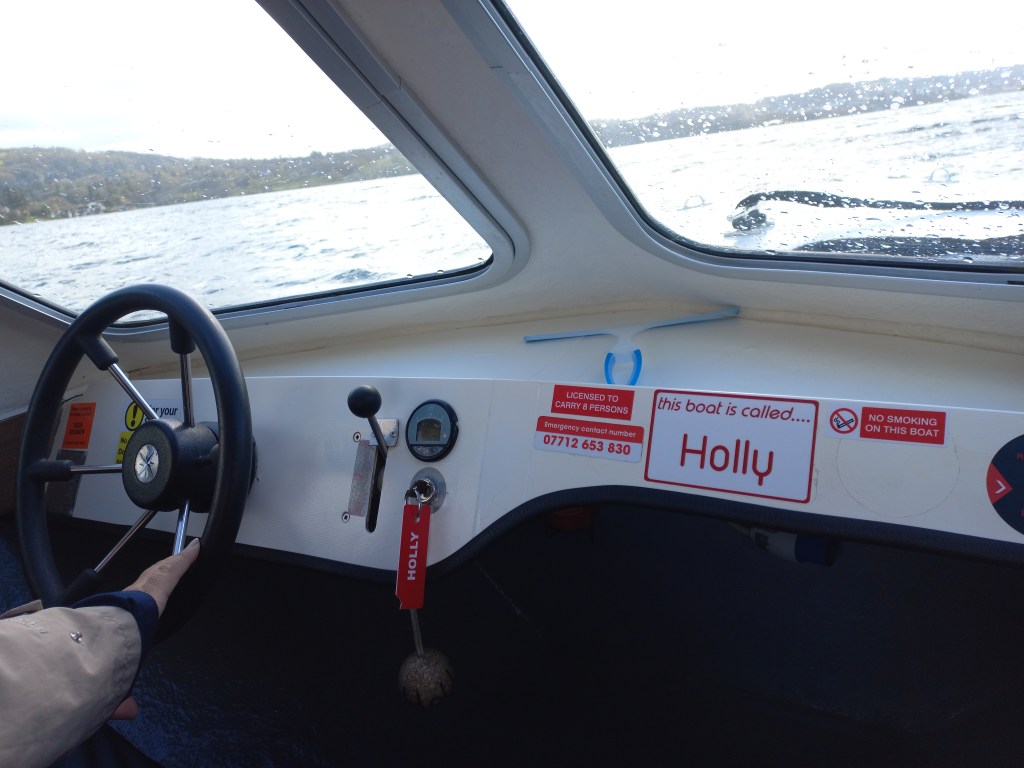
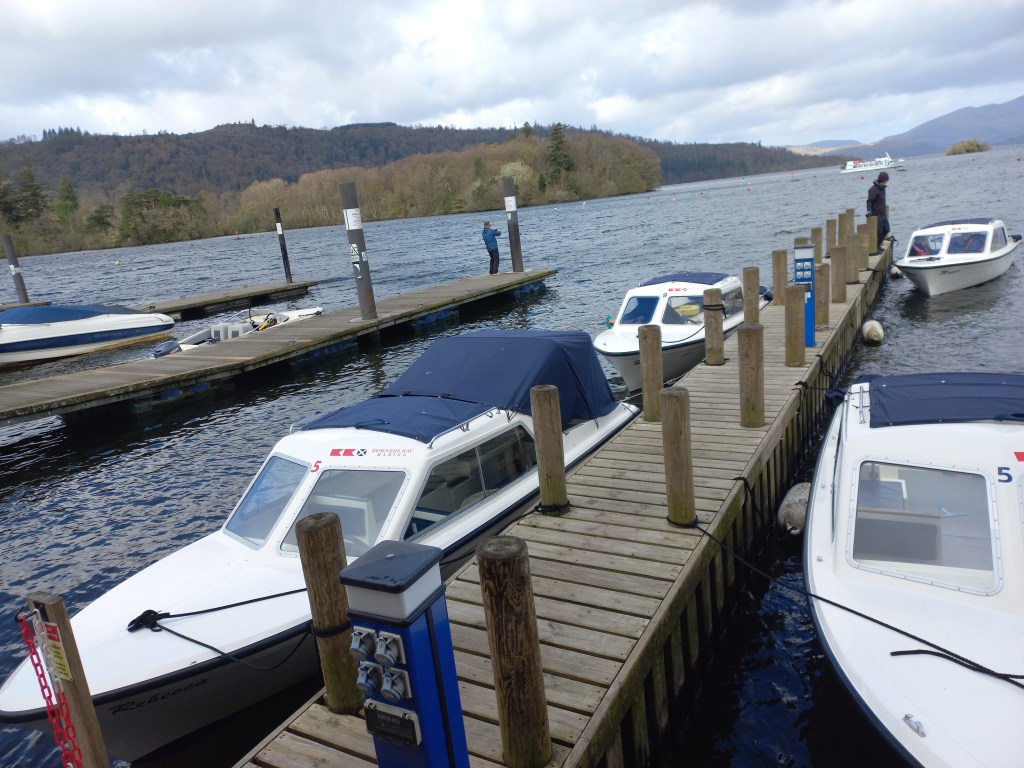
My children probably enjoyed the boat hire adventure most (see Windermere Boat Hire). We began the journey with the mind-blowing Windermere boat hire. These are electric motor boats that you ride yourself. We all took some turns, it is very safe. Your boat is yours for a couple of hours (£65), you can also hire one for just an hour. It was really relaxing, ‘no experience necessary and full training given.’ It’s scary at first, but you quickly get the hang of it. These are available from Bowness Beach, Bowness Dock, Waterhead, and Lakeside, they are absolutely amazing and easy to navigate (see website). Our boat was no normal boat, she was named Holly.
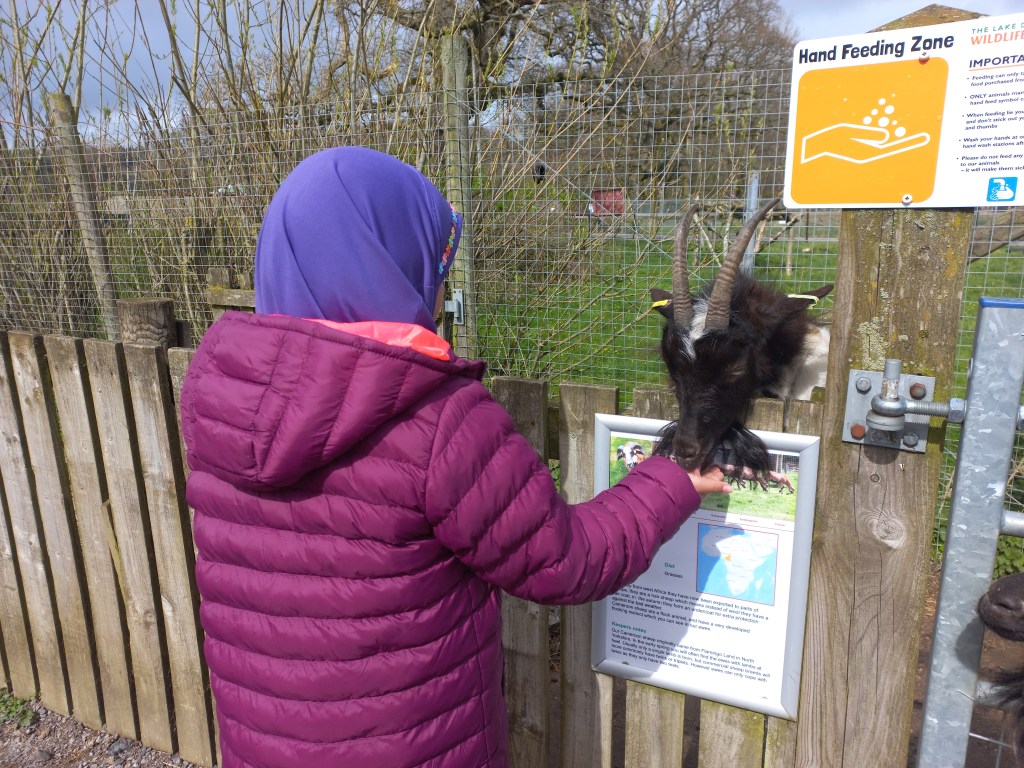
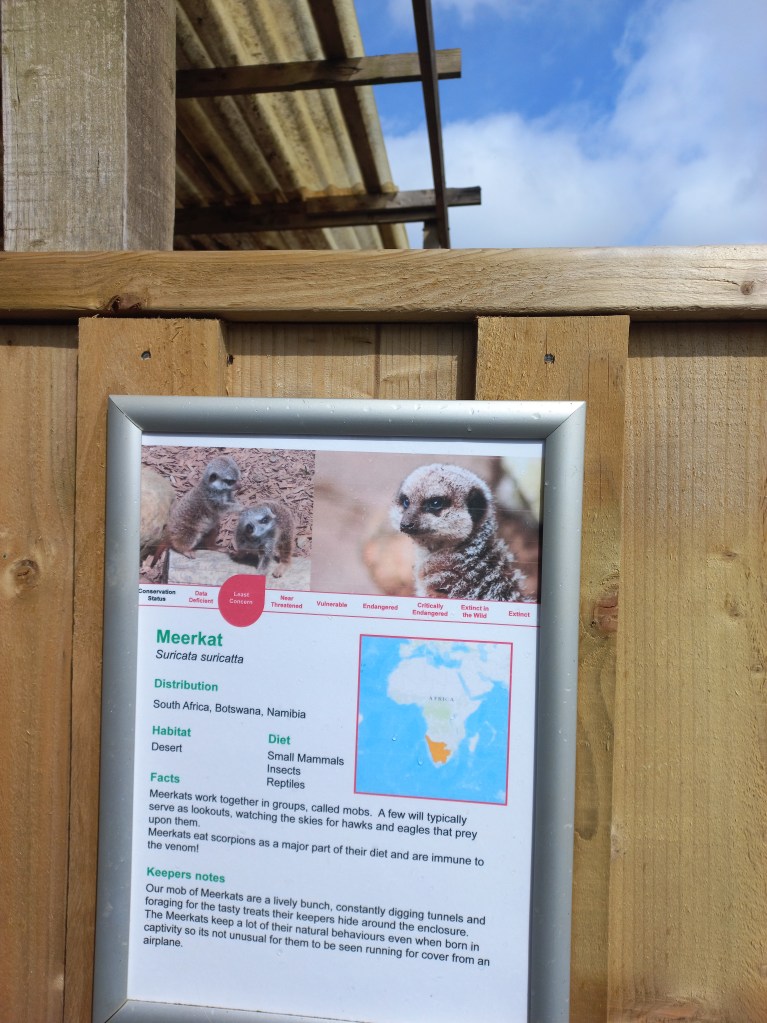
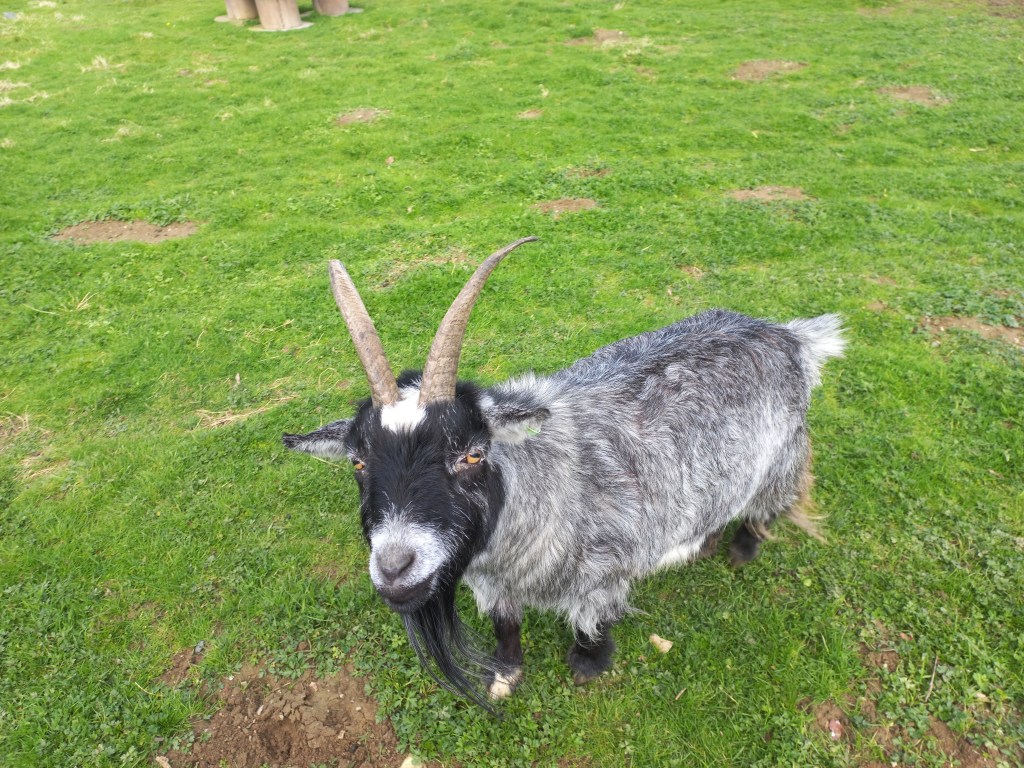
Did I say the boat ride was the highlight? No, actually, it’s a tie, because they absolutely loved the fantastic animal sanctury further north near Bassenwaite Lake (see link). Another area which is not documented much in the textbooks, but just as attractive as Windermere. The district has many hidden gems. We got to feed the goats, sheep and various herbivores in the sanctury. Other animals featured include Euraisian Lynx, red pandas, meerkats and many others. We witnessed the birds of prey show, which was quite spectacular as we witnessed their ability to fly in harsh windy condidtions and swoop in and over our heads!
I’ll leave you with some gifts! Well, okay they were for my mother, who said:
‘Ma Sha Allah, England is so beautiful, I wish I had been more confident to travel to these places. I’m so glad you studied geography, it makes me proud. I am learning with you, on this journey. Where are you going next?’
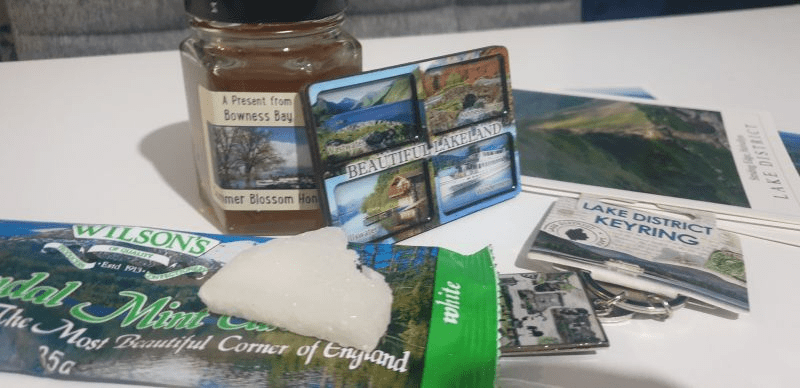
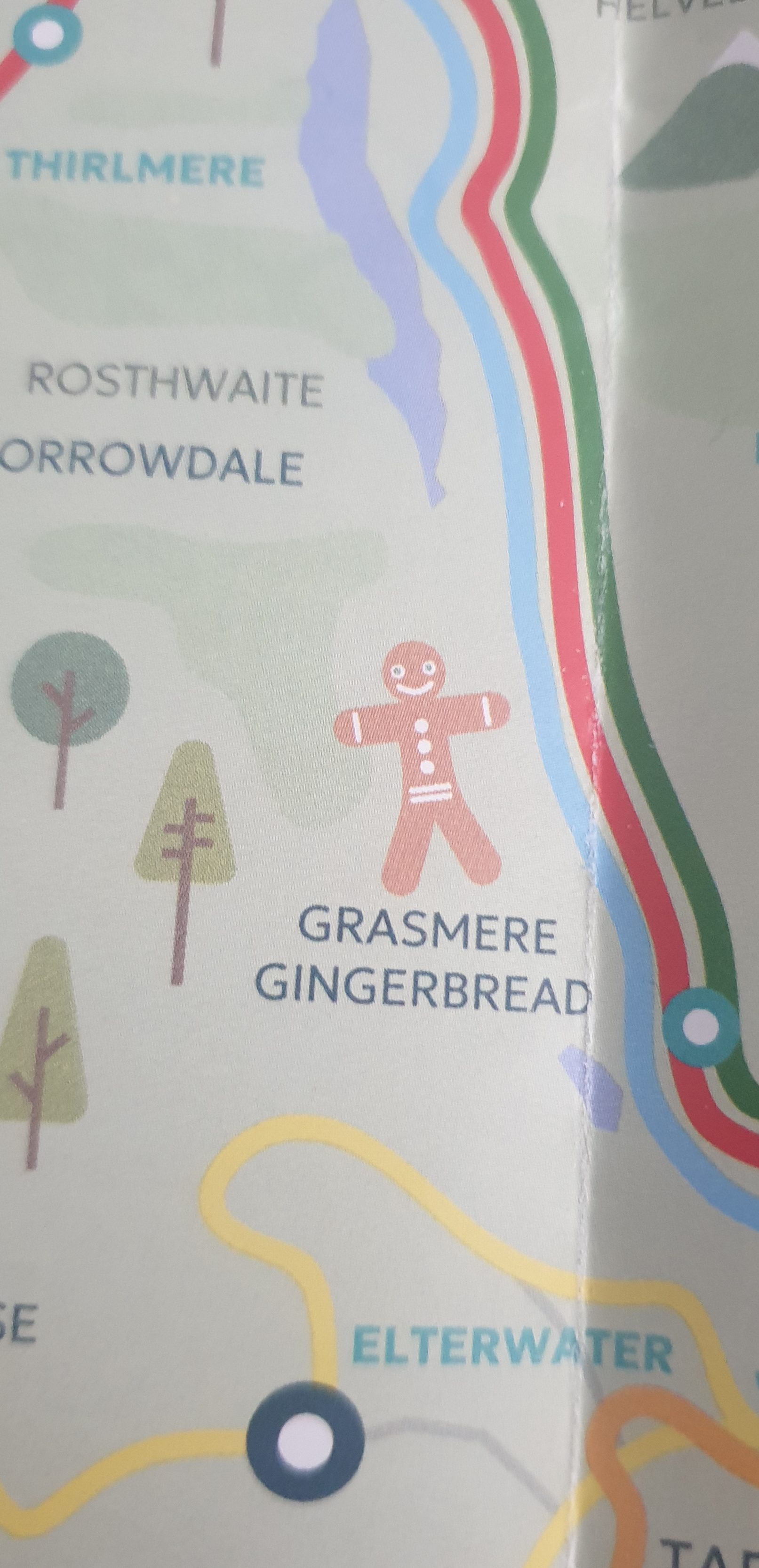
On a sad note, I didn’t get to buy any gingerbread – the shop had closed by the time we reached Grasmere. A call, a sign to come back again! Although the mint cake was addictive.
Once again, thank you for reading this post. I hope you enjoyed reading it as much as I enjoyed writing it. Until next time, peace and cheerio!

